Why and when to use a hands-free dog belt
There is more than one reason to use a hands-free dog belt, and all of them make everyday life easier. Maybe your dog pulls; maybe you want to grab treats without fumbling with the leash, or hold your morning coffee; maybe you want more comfort on runs together.
It might take a few walks to get used to it, but once the belt fits right and you learn how it moves with you, it often becomes a natural part of everyday life.
How does a hands-free belt work?
A hands-free dog belt is worn around your hips and lets you attach your dog’s leash to a front connection point instead of holding it in your hand. Compared to a simple hands-free dog leash, it is designed to offer more comfort and stability by distributing force through your body rather than your arm.
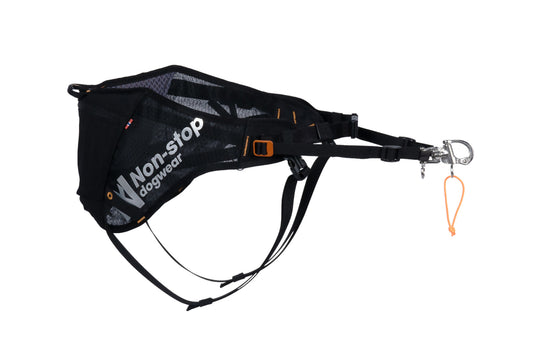
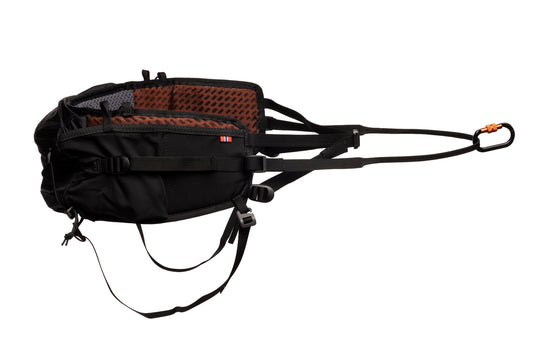
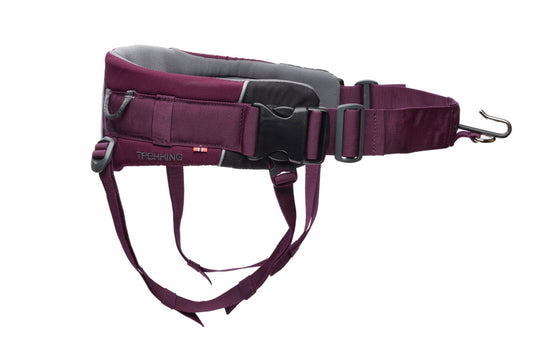
Features vary depending on how you use it. Some belts are built for everyday walks, while others are made for specific activities such as canicross, then there is everything in between. Depending on the model, they can be equipped with features such as leg straps, storage, extra cushioning, or a quick-release carabiner.
When is a hands-free belt beneficial?
More often than many think. From daily walks to running trails, a well-fitted belt can change how you move with your dog by giving you more freedom of movement, improving balance, and making pulling forces easier to manage.
For everyday walks

On regular walks, a belt paired with the right leash length lets you move more freely while keeping your dog close and connected. From carrying shopping bags to pushing a stroller or reaching for treats, a dog walking belt is useful in many everyday situations.
For dogs that tend to pull on the leash
Handling the pulling force with your core instead of one arm, reduces strain and possible injuries in your upper body.
Linn Beate Sinding-Larsen, dog musher and physiotherapist for both dogs and humans, explains that when you hold the leash in your hand, “the pulling force is transferred directly into relatively small structures in the upper limb.” The fingers, forearm, and wrist take the first hit, often working continuously just to keep hold of the leash. In the short term, that can create tension and fatigue. Over time, the strain travels up through the elbow and shoulder and may contribute to overuse issues such as tennis elbow.

With a hip belt, the load is redirected into larger muscle groups around the pelvis, thighs, and core. “This redistribution allows the body to absorb and manage load more effectively, significantly reducing stress on smaller, more vulnerable structures in the arms and shoulders,” Linn Beate explains.
Once properly fitted and paired with an elastic line that absorbs pulling or sudden lunging, a dog walking belt can make life far more comfortable for both of you. It does not replace training, though. If you want a calmer walk, it is still worth teaching your dog not to pull on leash, while dogs who love to pull can also benefit from doing it in the right context with proper pulling gear.
For more active days

Some activities simply work better with a belt, and some would not work without one. No matter if your dog is pulling or not, using a belt while hiking, running, or skiing together helps you move more naturally than with a leash, keep your balance, and reduce the risk of falls or injuries.
In these activities, pairing the belt with a bungee line makes the movement smoother and more comfortable by softening sudden changes in speed or direction. Sport-specific options, such as a canicross belt or skijoring belt, also improve technique and change the whole feel of the activity, helping you and your dog move more naturally together.
How should a hands-free dog belt fit?
Fit is what makes the belt comfortable and allows it to work as intended. Linn Beate explains that “the belt should be positioned just below the iliac crest (hip bones), allowing the padding to rest securely over the pelvis.” That placement helps direct the force into stronger muscle groups instead of your lower back.

She also notes that “the leg straps are important for stabilization, preventing the belt from sliding upward when the dog pulls and helping maintain correct load distribution.” If the belt rides too high, more of the load shifts to the lower back instead and can lead to discomfort or injury.
Ready to give it a try?
At Non-stop dogwear, our hands-free belts are built on years of experience in dog-powered sports and everyday life with dogs, giving you the same comfort trusted by the world’s best athletes. They are designed with strong materials and secure construction to give you confidence even with powerful dogs. Our range covers everything from everyday dog walking belts to lightweight, performance-driven running belts.